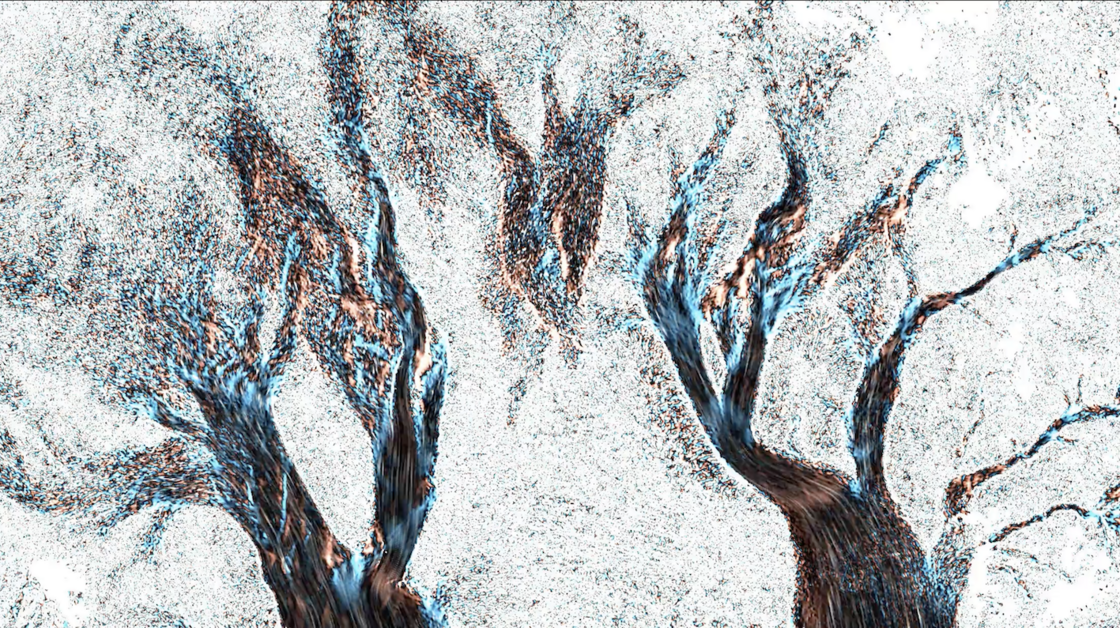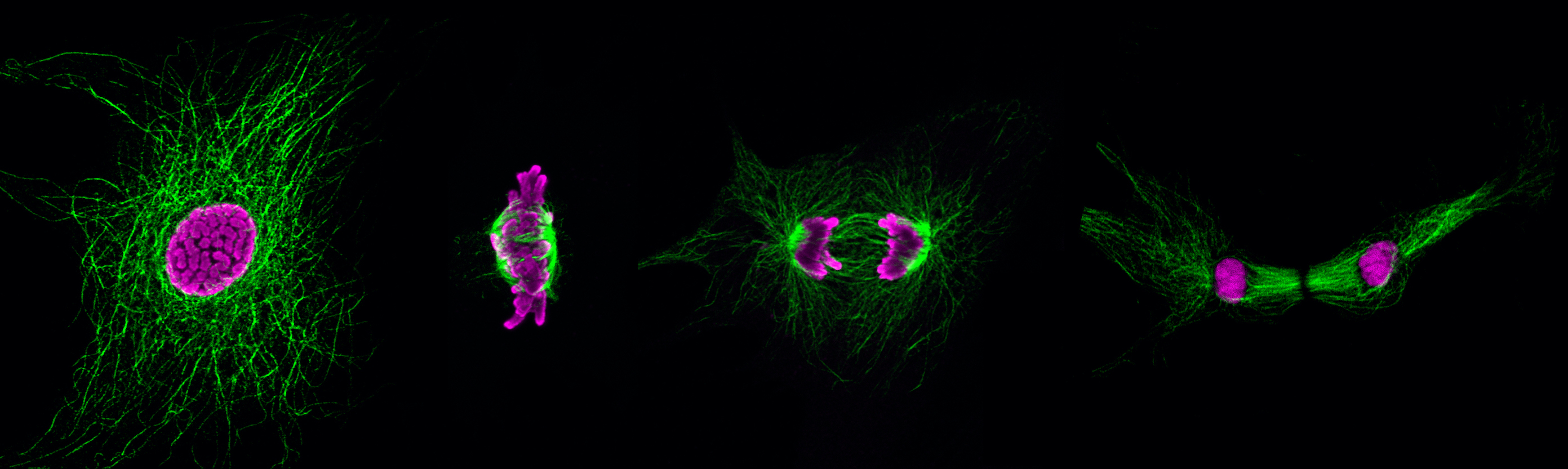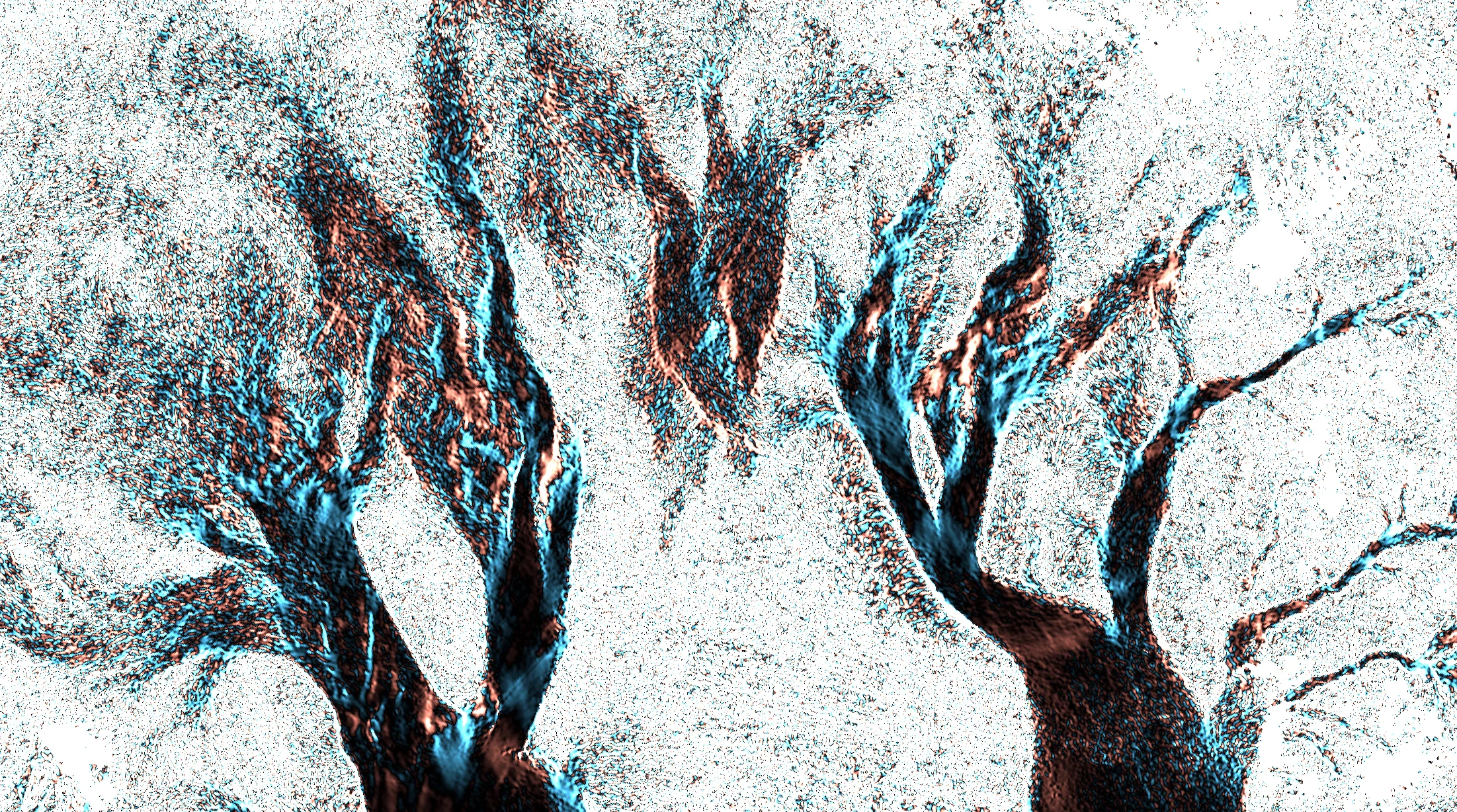
Antarctic ice streams and dividing heart cells reveal patterns of movement at very different scales. These two images turn scientific observations into pictures we can explore. Select an image to discover what it shows and how it was made.
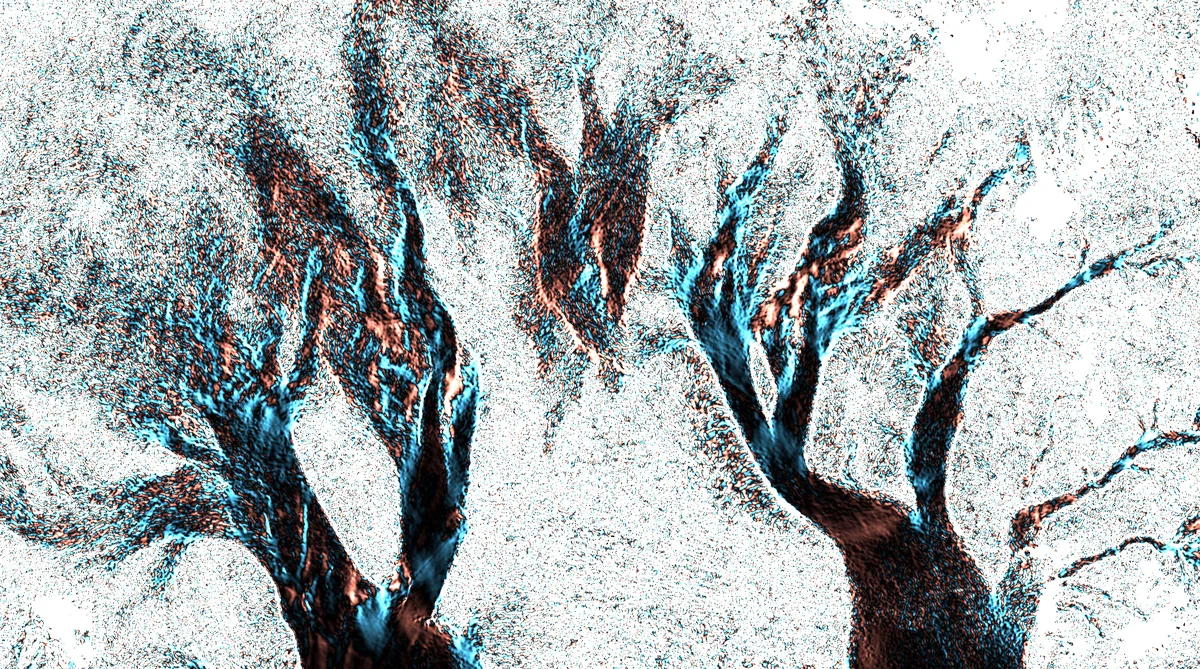
This visualisation covers roughly 1,000 kilometres of West Antarctica’s Siple Coast. Blue marks converging flow and bronze marks diverging flow; black identifies ice moving faster than 50 metres a year. The pattern reveals ice streams funnelling ice towards the coast, making motion on a continental scale legible as a single image.
Image: Felix Ng
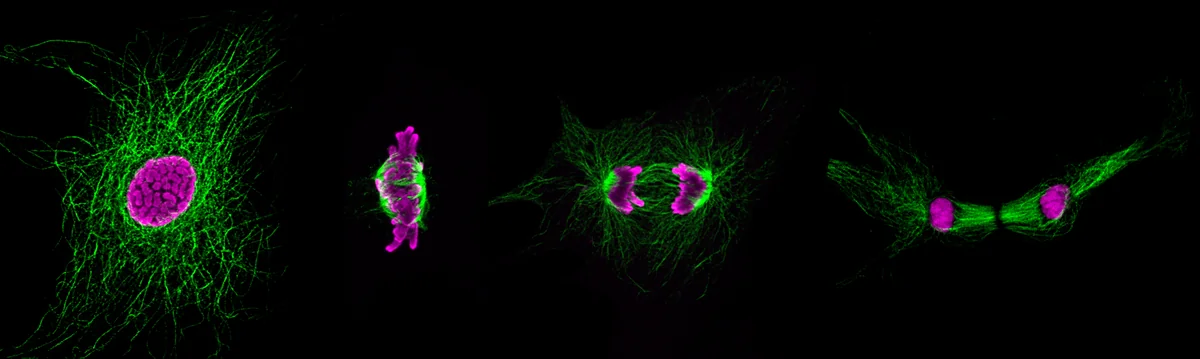
Chromosomes and the microtubule network become visible through fluorescence microscopy. The images follow stages of mitosis in heart muscle cells: chromosomes align, separate and move into the two developing cells. The sequence makes a normally hidden process visible, rather than presenting a single instant.
Image: Chi Chung Wu
Felix Ng is Reader in Theoretical Glaciology at the University of Sheffield. He combines mathematical models with observations to understand how glaciers and ice sheets move, drain and change. Supported by a Croucher Scholarship in 1995, he completed his doctorate at Oxford. His winning image grew directly from his research into Antarctic ice streams, revealing the branching networks through which ice flows towards the sea.
Stay in the loop!
Subscribe to keep up with the latest from Croucher Foundation.